

Research consistently shows that children in ABA therapy make significantly greater progress when their parents are actively involved in the treatment process. Yet many ABA providers treat parents as observers rather than participants. At Nūr Behavioral Health, we take a fundamentally different approach — because we know that you are your child's most important therapist.
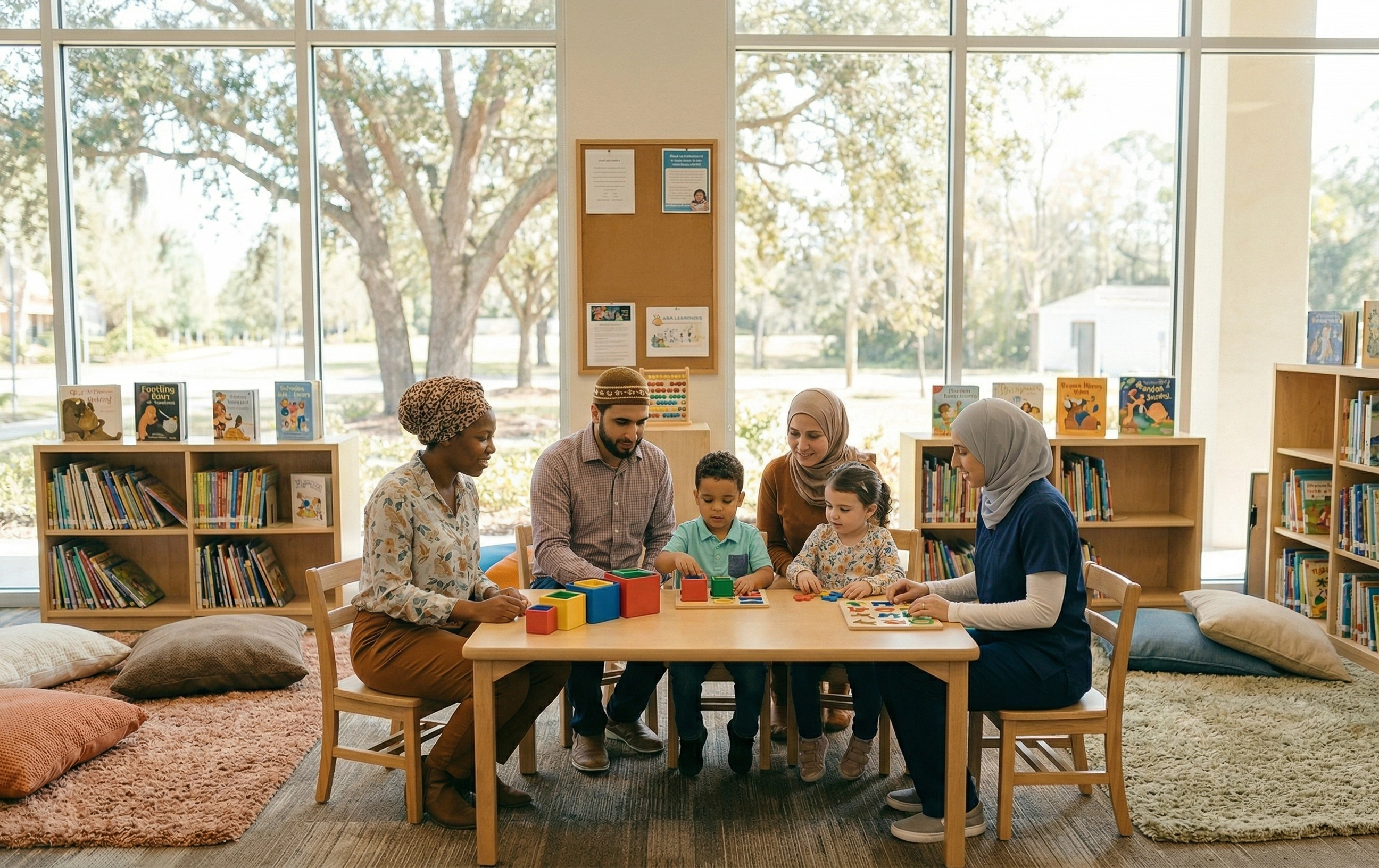
Why Parent Involvement Matters
A therapist might spend 10, 20, or even 40 hours per week with your child. But you spend the other 128+ hours. That means the vast majority of your child's learning opportunities happen outside of formal therapy sessions — at breakfast, during car rides, at the grocery store, before bedtime. When parents understand the principles behind ABA and know how to apply them consistently, every one of those moments becomes a chance for growth.
Studies published in the Journal of Applied Behavior Analysis have shown that parent-implemented interventions can be as effective as therapist-delivered interventions for many skill areas. When parents and therapists work as a coordinated team, the results are transformative.
What Does Parent Training Look Like?
At Nūr Behavioral Health, parent training isn't an afterthought — it's a core component of every treatment plan. Your BCBA will schedule regular parent training sessions where you'll learn specific strategies tailored to your child's goals. These sessions might include direct coaching during therapy (the BCBA guides you in real-time as you practice techniques with your child), video review of therapy sessions, role-playing challenging scenarios, and developing behavior intervention plans for specific situations.
Practical Strategies You'll Learn
Reinforcement techniques: How to identify what motivates your child and use it effectively to encourage positive behaviors.
Prompting and fading: How to provide just enough support to help your child succeed, then gradually reduce that support as independence grows.
Antecedent strategies: How to set up the environment and your interactions to prevent challenging behaviors before they occur.
Data collection basics: Simple ways to track your child's progress at home so the therapy team can make informed decisions.
Generalization: How to help your child use skills learned in therapy across different settings, people, and situations.
Overcoming Common Challenges
We understand that being actively involved in your child's therapy while managing work, other children, and daily life can feel overwhelming. That's why Nūr's parent training is designed to be practical and sustainable. We don't ask you to become a therapist — we ask you to become a more confident, informed version of the parent you already are. Our goal is to give you strategies that fit naturally into your existing routines, not to add more stress to your plate.
The Long-Term Impact
Children who have actively involved parents in their ABA programs tend to maintain their gains longer after formal therapy ends. The skills you learn during parent training stay with you forever — they become part of how you interact with your child, how you solve problems together, and how your family grows. This is the ultimate goal of family-centered therapy: to make the family itself the engine of lasting change.
Partner With Nūr for Your Child's Success
Our family-centered approach puts parents at the heart of every treatment plan. Schedule a free consultation to learn how we can support your family, or call (656) 222-0703.